Every letter carries a story. Here are a few that stayed with us.
Featured
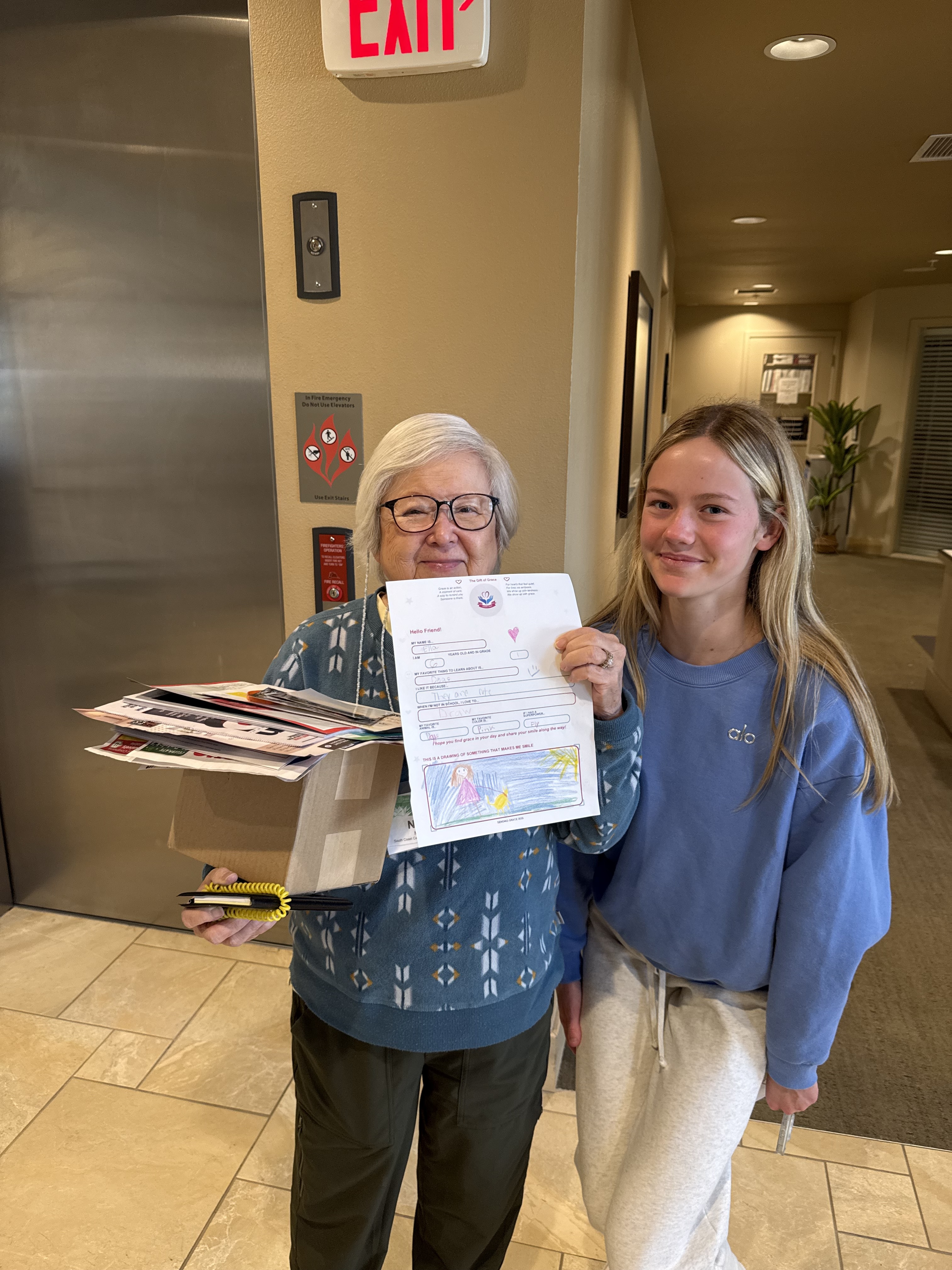
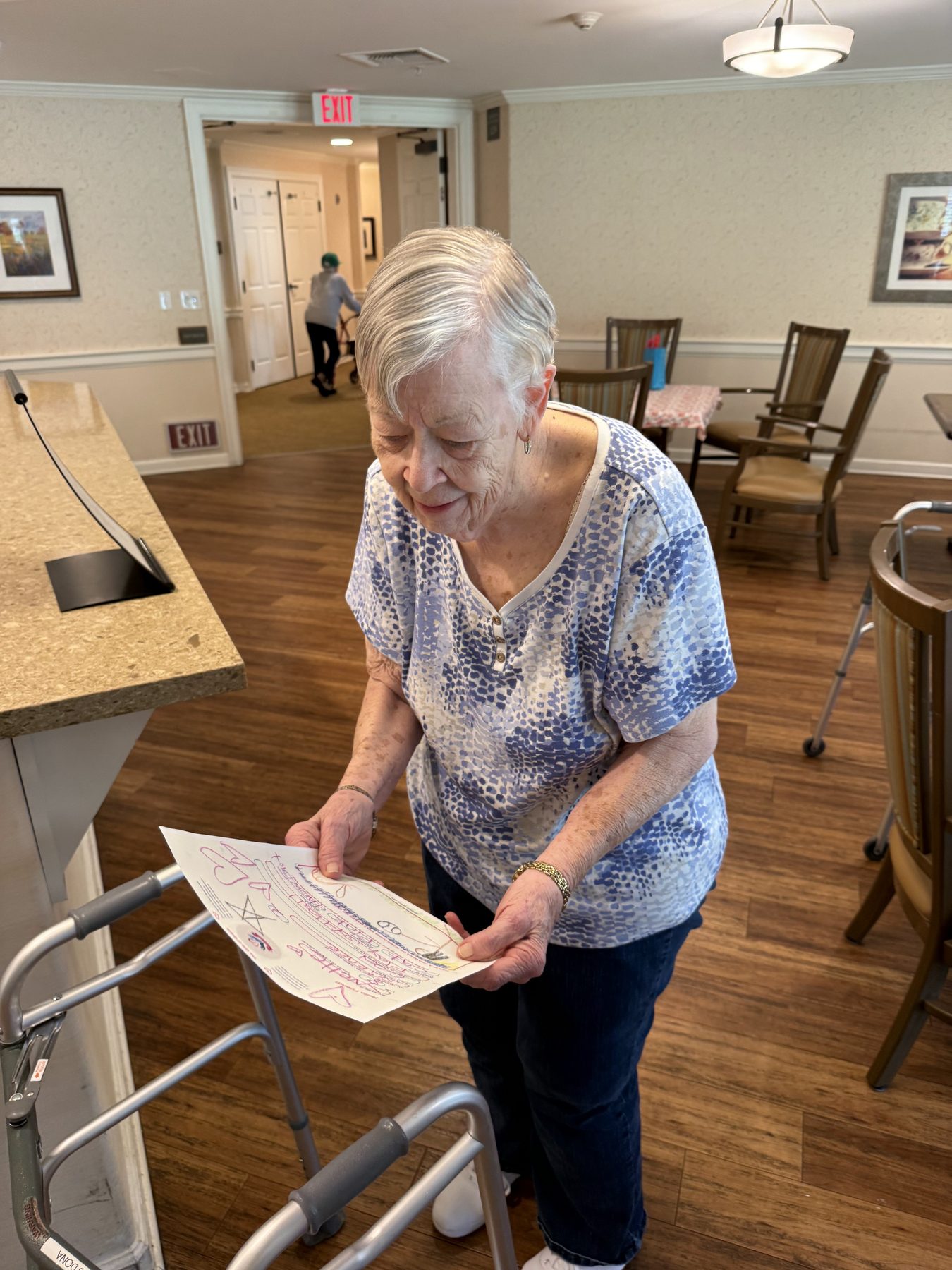
Shirley is a resident at a local care facility. She wasn't expecting anything that afternoon. I had simply shown up at the front desk with a stack of letters, the way I always do.
But something about the letter Shirley received stopped her. She held it up to show me. The drawing on it, a girl at the beach done in crayon by a child who had never met her, made her smile in a way that was hard to look away from.
"She held it up like it was something worth showing. Because it was."
That moment, just the two of us standing in a hallway connected by a piece of paper a child had colored, is exactly what Sending Grace is for. I didn't know Shirley before I walked in. Now I won't forget her.
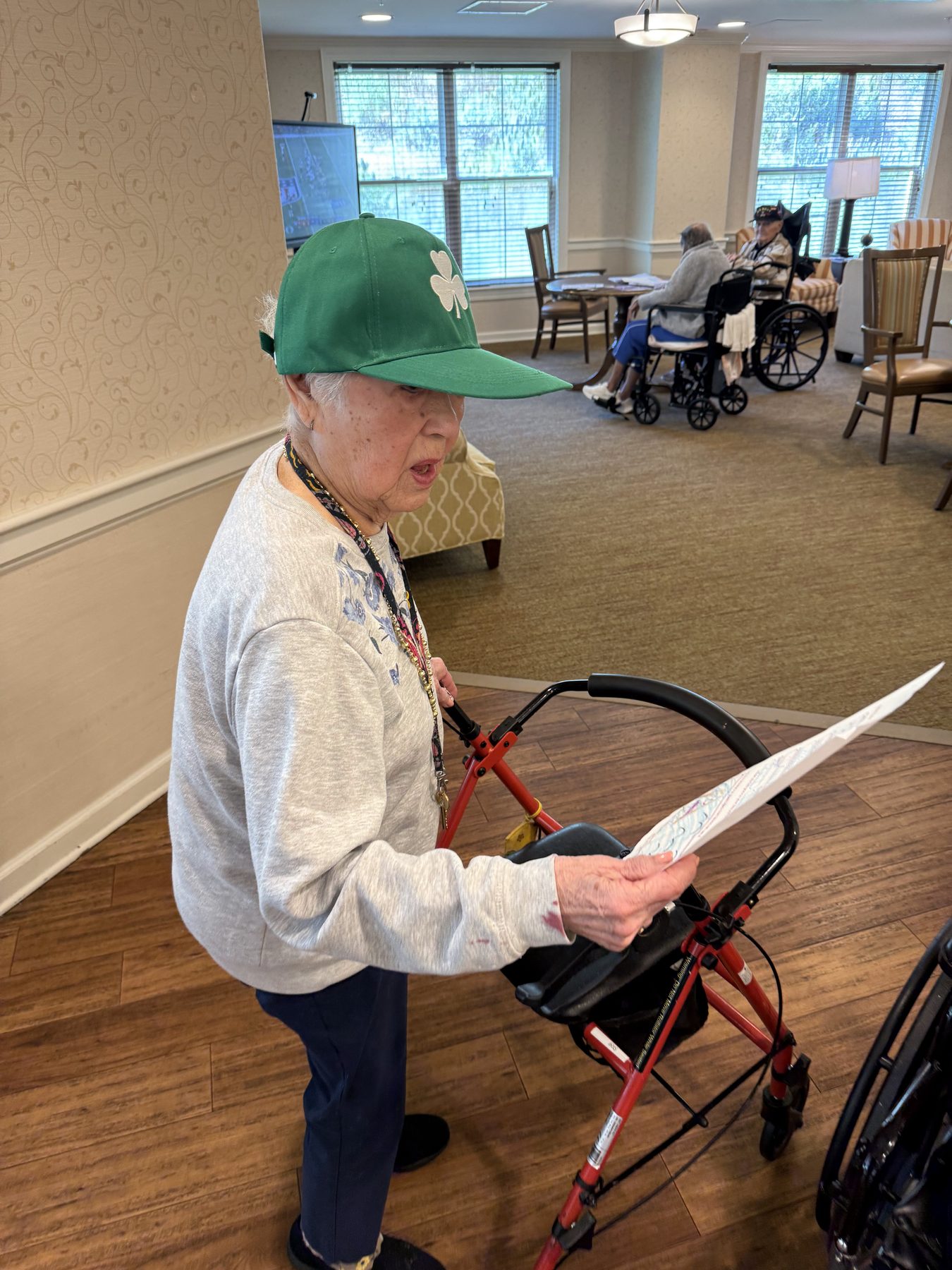
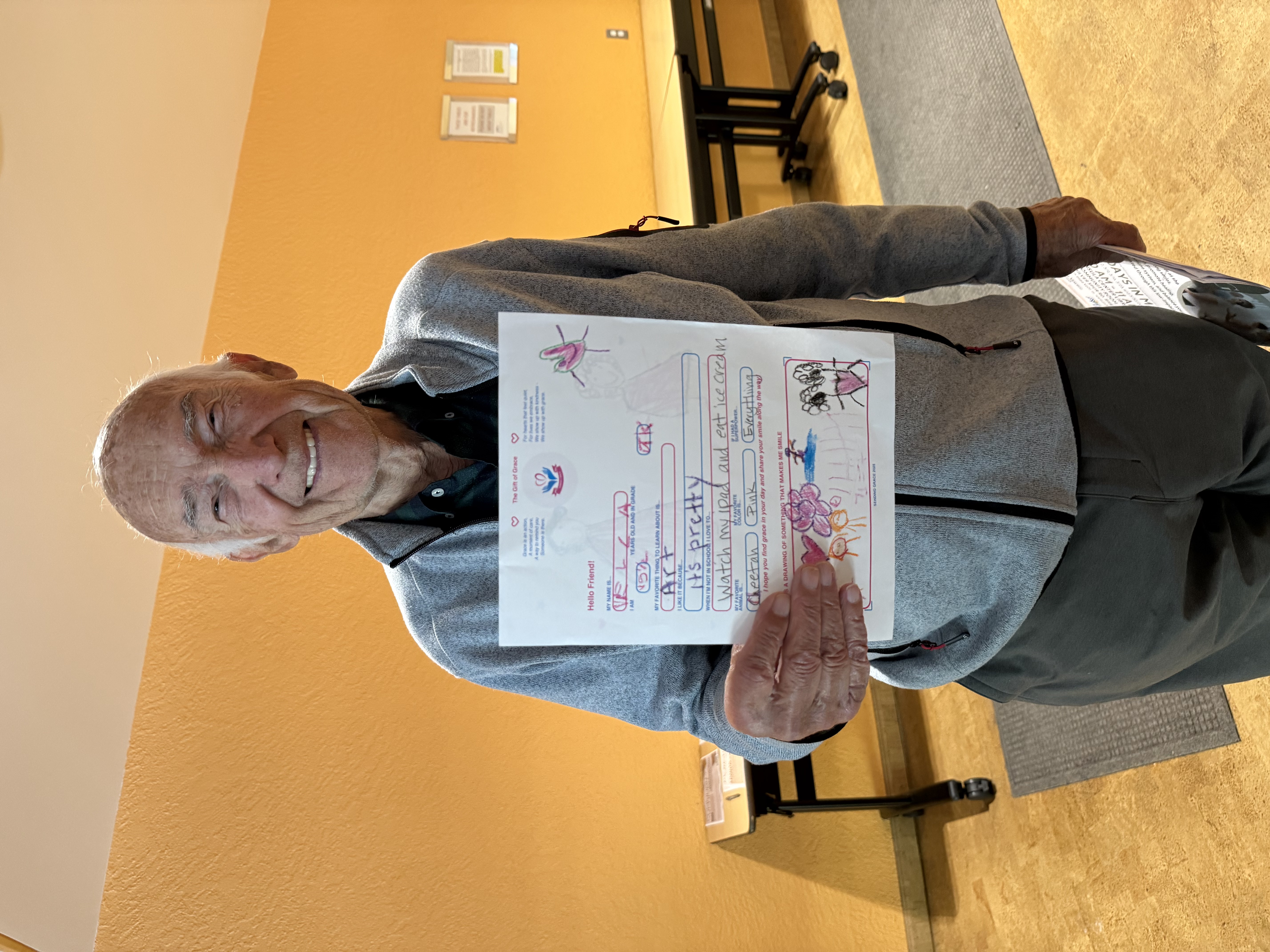
Dennis is a local senior who received a letter from a child he had never met, a kid who had filled out a template, drawn a picture, and sent it to a stranger just because someone told them it might matter.
It mattered.
He held that letter up and smiled like it was the best thing he'd received in a long time. That photo is the whole mission of Sending Grace in a single image. A child gave something. A senior received it. And for a moment, neither one of them felt like a stranger. I'll never forget that smile.
Sometimes facilities request that the letters just be dropped off, no visit, no presentation. A little something slipped quietly into the room of someone who needs it, with no fanfare. I hand them to a staff member at the front desk, and that's it. Whatever happens next happens without me.
I've come to understand that's not mine to see. The giving is enough.
And sometimes, word gets back.
A staff member at an assisted living facility told me about one woman who received a letter from a young girl named Ava she had never met. She read it three times at dinner. Then she asked to keep it.
I've learned that this is what happens to the letters. They don't get tucked in a drawer or set on a pile. They find a place of honor, on a nightstand, on a windowsill, propped against a lamp where the light hits them in the morning. Small pieces of paper covered in crayon and careful handwriting, treated like something precious.
Because they are. A child who has never met you took time to think about you. In a place where days can blur together and visitors are few, that letter is proof that someone, somewhere, knows you exist.
A few days later, a staff member sent me a photo. The letter was taped to the lamp on her nightstand.
That's what we're really delivering. Not paper. Not words. Just that. Proof.
He came up to me quietly, after the other kids had started writing. That's usually how it happens, the ones carrying something heavy wait until the room gets loud enough that no one will notice.
He asked me if a letter could still reach his grandma. The one who had died.
He wasn't being poetic. He was genuinely puzzling it out, the way little kids do when they're trying to apply logic to something that has no logic. If you write a letter, someone has to receive it. So how does that work, exactly, when the person is in heaven?
I told him yes. I told him to take the letter home and read it to her whenever he felt sad. That she would hear it.
I don't know if that's true. But I know he needed it to be. And I know that sometimes the most graceful thing you can do is hand someone the words they need and trust them to find their way to the right place.
He went back to his seat and kept writing. He wrote for a long time.
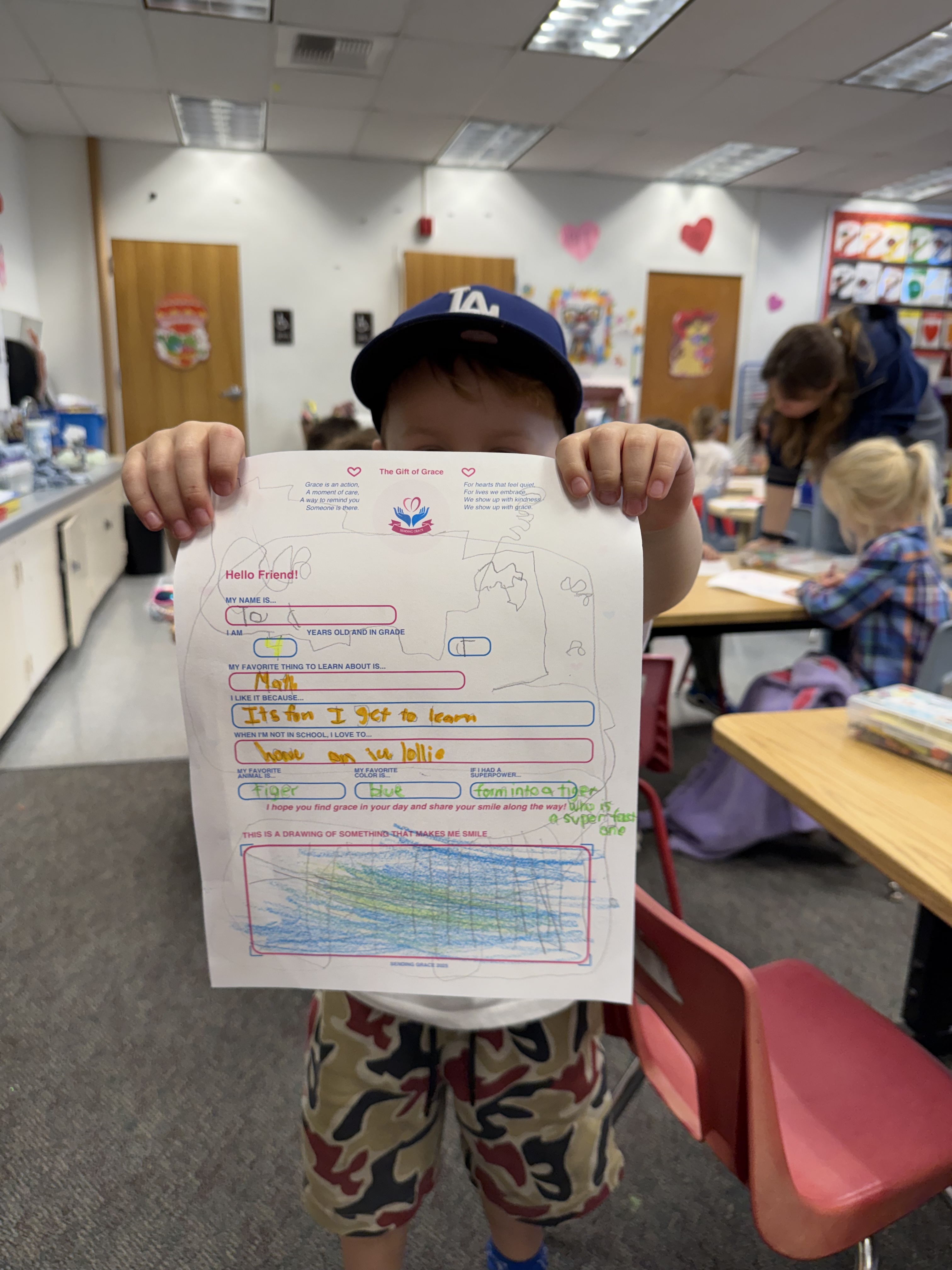
He was four years old, wearing a Dodgers hat almost too big for his head, and he had something very important to say.
His favorite color was blue. So when it came time to draw something that makes him smile, he drew the ocean.
Not because anyone told him to. Not because it was the easiest thing to draw. But because he wanted the person receiving his letter to know something true about him, that he loves the color blue, and the ocean is the bluest thing he knows.
He held it up when he was done, arms stretched wide, letter covering his face. He didn't need anyone to tell him it was good. He already knew.
That's the thing about kids this age. They give without overthinking it. They don't wonder if their drawing is good enough or if a stranger will care. They just give, completely, proudly, with everything they have.
Somewhere, a senior is going to receive a letter from a four-year-old in a Dodgers hat who wanted them to know about the ocean. I hope it makes them smile as wide as he did.
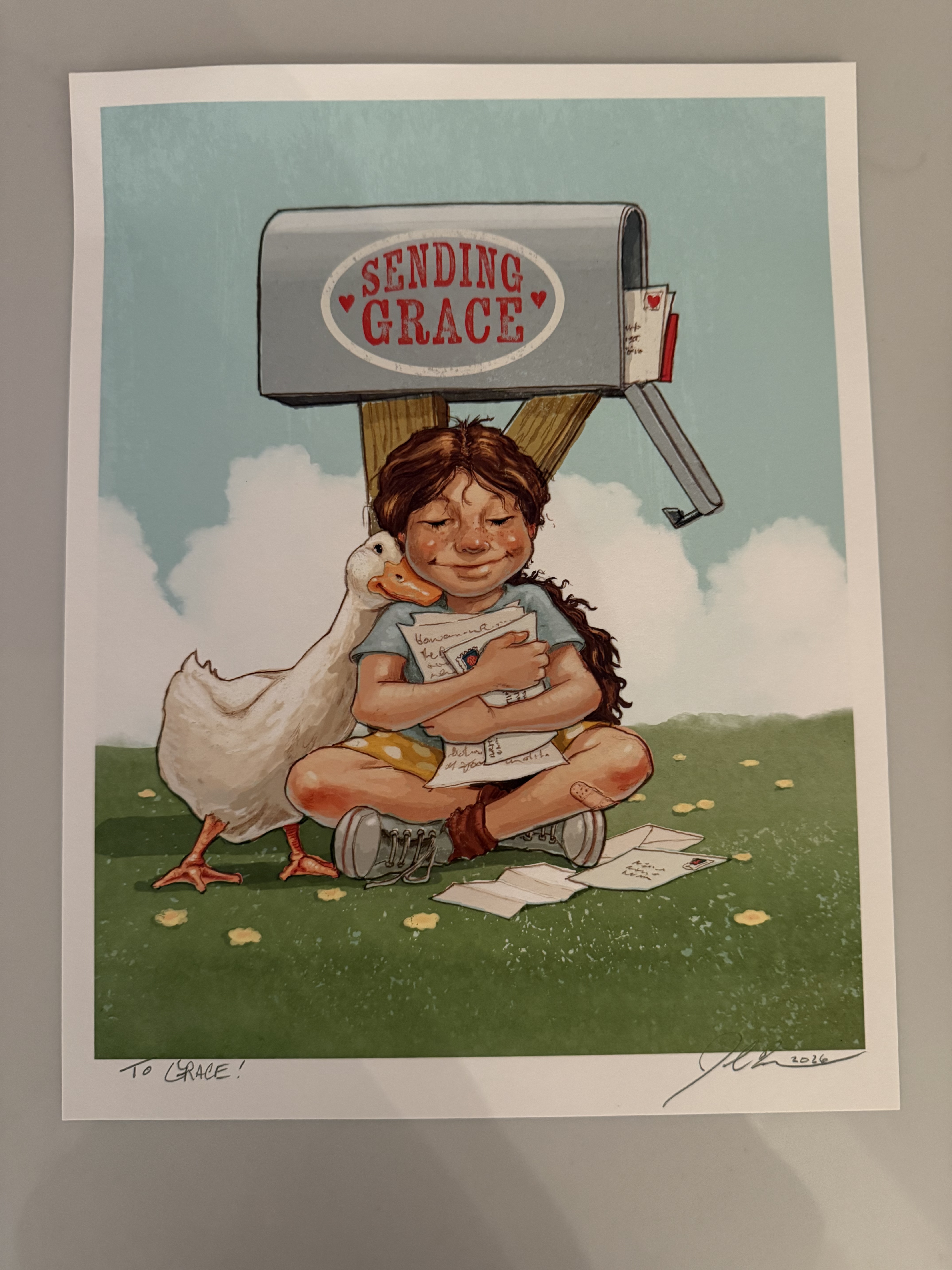
After I connected with author Hayley Rocco, something unexpected happened. Hayley's husband, illustrator John Rocco, created this original piece of artwork as a gift. When it arrived, I didn't have words.
A personalized replica of the cover art from How to Send a Hug, created as a gift by illustrator John Rocco. 2026.
I reached out to Hayley after reading her picture book, which tells the story of a girl who sends handwritten letters to her grandma as hugs. It felt like she had written it about me. Hayley was warm and generous, and we ended up doing a Zoom together to talk about letters, kindness, and why connection matters so much right now.
Then this arrived. A girl under a Sending Grace mailbox. A goose leaning in close. Letters scattered in the grass. I looked at it for a long time. I still do.
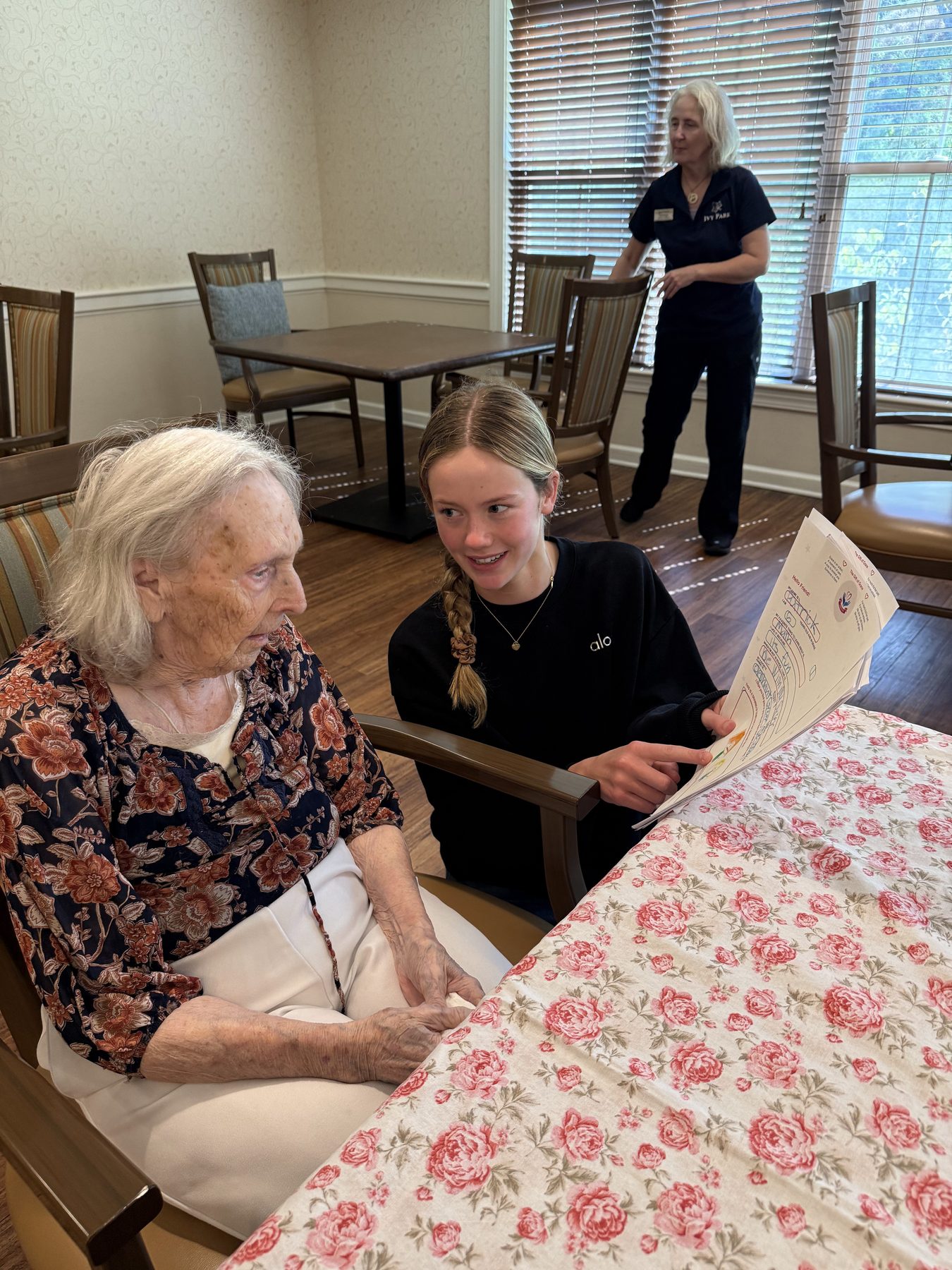
I brought a stack of letters from local elementary school kids. What happened next is hard to put into words, so I'll let the photos do most of the talking.
I came in with a stack of letters one afternoon, the way I always do. I didn't know who I'd meet or how long I'd stay. I just knew the letters needed to get to the right people.
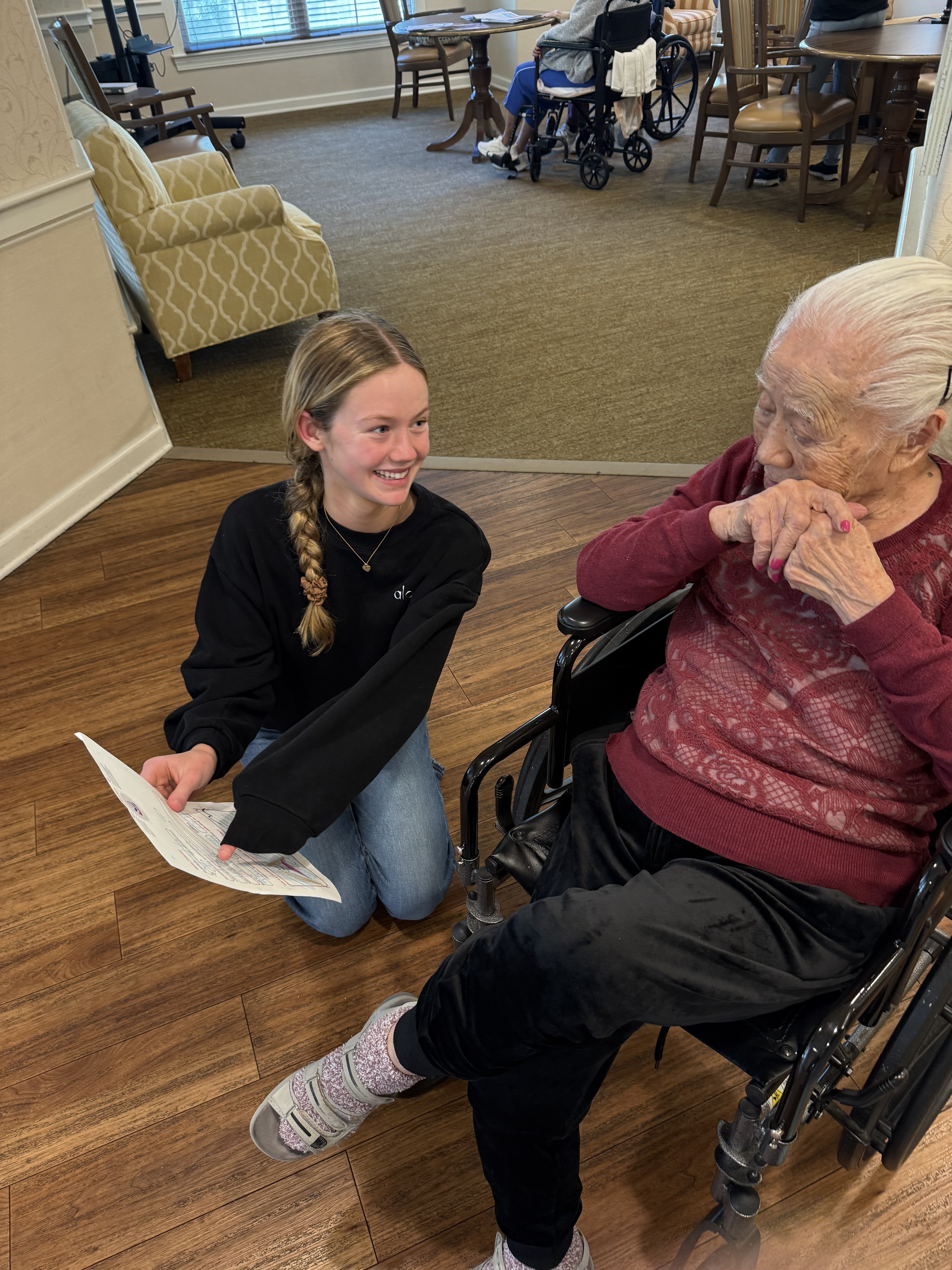
What I didn't expect was how much time I'd spend just sitting with people. Reading letters together. Pointing to the drawings. Watching a resident's face when she realized the picture was for her specifically, that a child she'd never met had drawn it thinking of her.
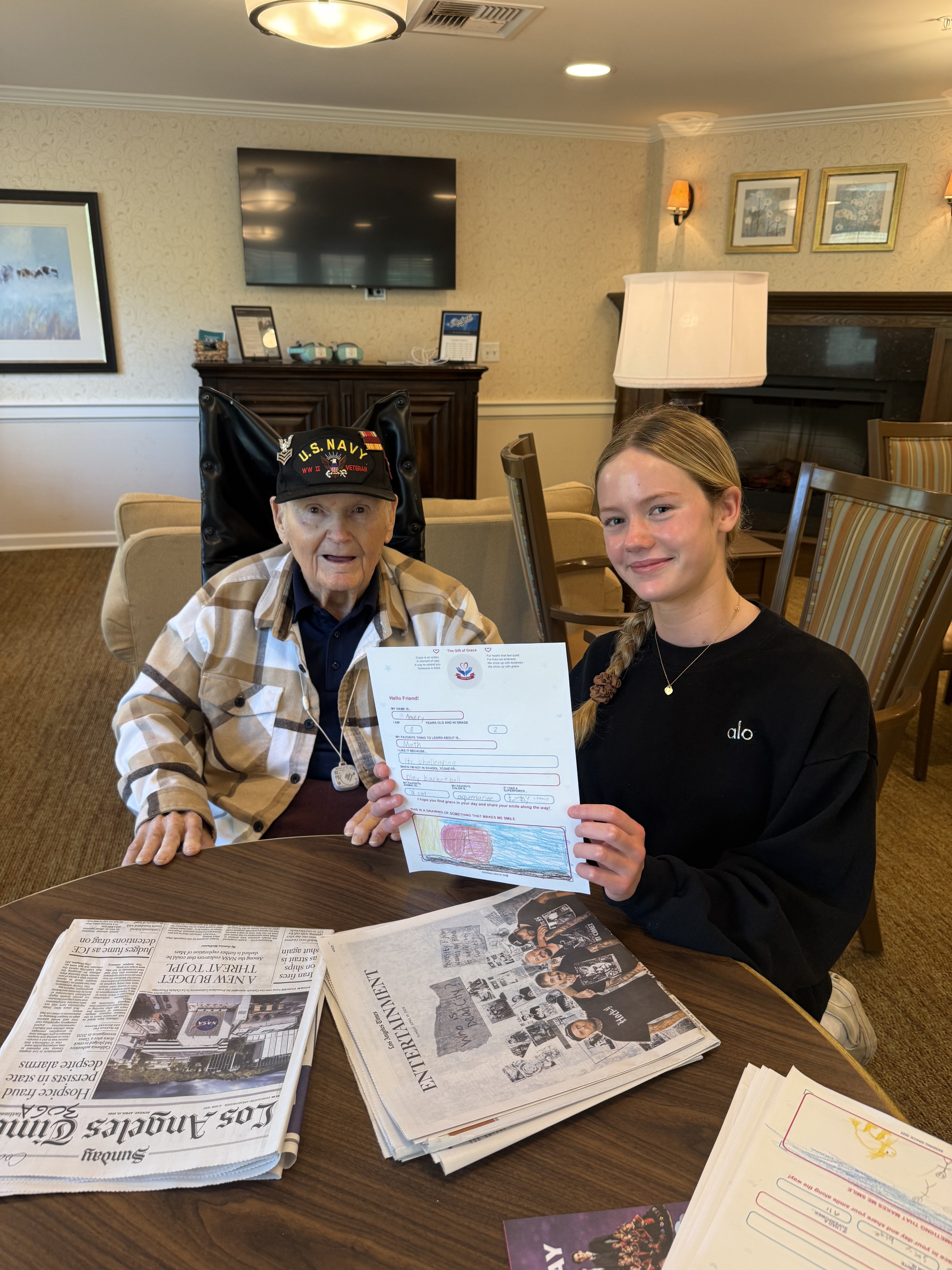
One woman read her letter three times. Another held it against her chest like she was keeping it warm. A WWII veteran in a Navy cap sat with me at a corner table and talked about the drawing a kid had made of a sunset. He said it reminded him of being out on the water.
"I just brought the letters. They brought everything else."
Coach, a WWII Navy veteran, with his letter
Reading a letter together
Ivy Park at Palos Verdes
If you've hosted a Sending Grace visit or received a letter, we'd love to hear what it meant to you. With permission, we share stories here to show what grace in action really looks like.
Stories we feature receive a Sending Grace candle, handmade in Palos Verdes, as our thank you.
Share Your StoryHear about new stories, new schools, and ways to get involved.